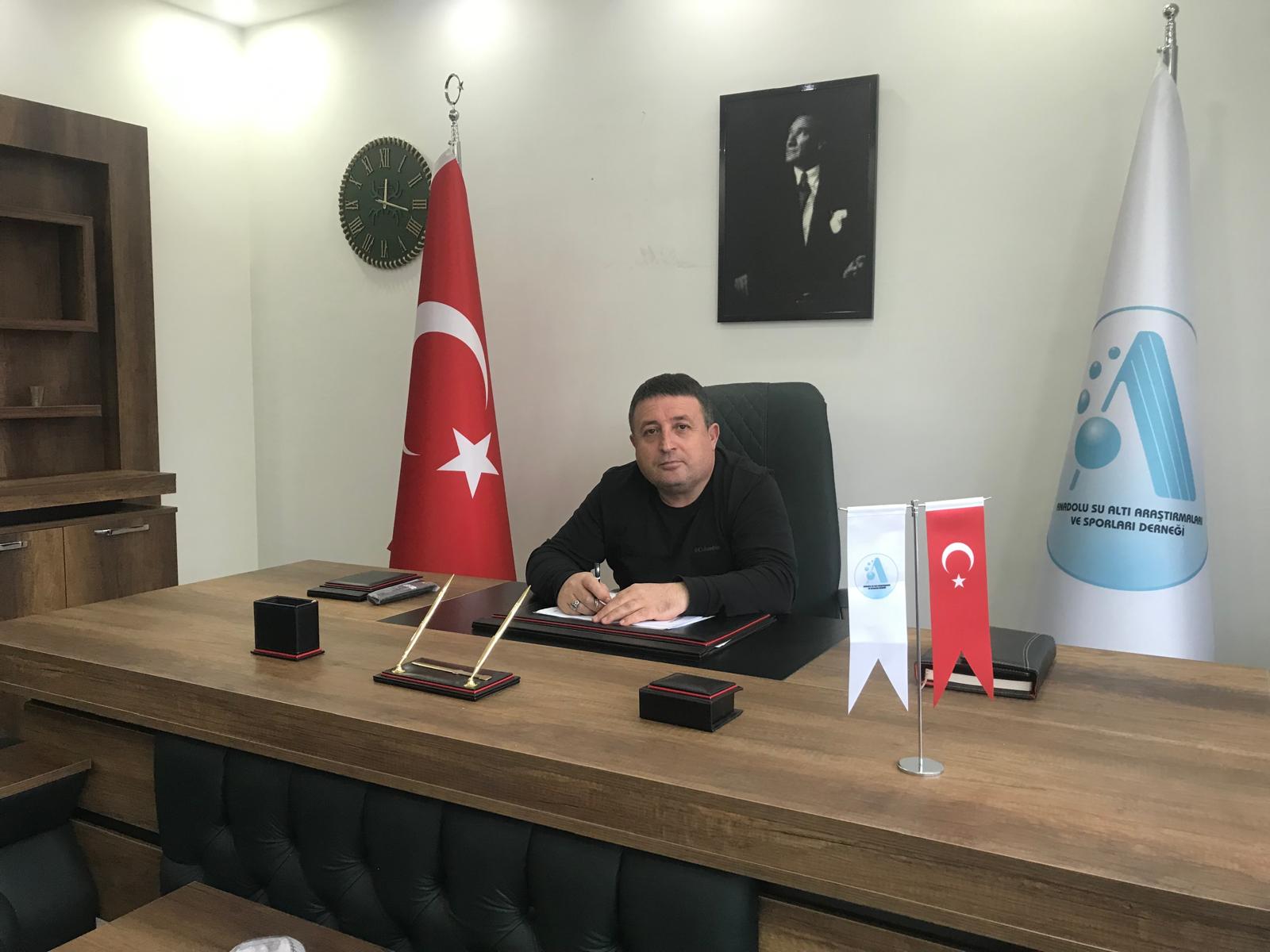
BITLIS – ASAD President Mehmet Salih Aygün stated that due to global climate change, drought, and tectonic activity, the water level of Lake Van has visibly decreased in recent years. Emphasizing that the association has initiated studies on the declining water level, Aygün underlined the urgent need to take necessary precautions and conduct comprehensive research as soon as possible.
One of the association’s founders, hydraulics expert and civil engineer Prof. Dr. Mehmet Cihan Aydın, also shared his assessment of the decrease in Lake Van’s water level. Providing detailed information, Prof. Dr. Aydın said:
“Covering an area of approximately 3,700 square kilometers, Lake Van is the world’s largest soda/saline lake and the largest lake in our country. Located within a closed basin, Lake Van has experienced significant level fluctuations throughout history, and these ongoing changes continue to attract the interest and curiosity of both the public and researchers. Previous studies have proposed various theories regarding the causes of these level changes, attributing them to factors such as the region’s volcanic and tectonic (seismic) structure, the chemical and physical properties of the lake water, and even solar activity. However, the more widely accepted view in the scientific community is that changes in the lake level are primarily hydrometeorological in origin—that is, related to seasonal factors such as precipitation and evaporation.
Situated in a closed basin, Lake Van is fed by precipitation falling over the basin. In other words, precipitation (snow, rain, hail, etc.) over the catchment area enters the lake either directly (surface runoff) or indirectly (snowmelt, groundwater flow). The only known outflow from the lake is evaporation. Since surface runoff is collected by rivers, the flow regimes of the rivers entering the lake are important in relation to lake level changes. No inflow or outflow has been detected at the lakebed. In this way, seasonal variations determine the water balance of the lake. The model that best explains these changes in lake level is the water budget (water balance) model.”
Aydın continued:
“When water level changes in recent years (2010–2020) are examined through the water budget approach, it is observed that annual level variations are associated with hydrometeorological variables. In other words, annual level fluctuations can be described as seasonal or meteorological. Looking at annual average level changes, a noticeable increase was observed between 2011 and 2012, with the lake reaching its maximum level in 2012, followed by a decline until 2015. The level rose again somewhat until 2017, and since then it has continued to decrease. Analyses indicate that the abnormal rise observed in 2011 cannot be explained solely by hydrometeorological (seasonal) factors. Considering this period, the magnitude 7.2 earthquake that occurred on October 23, 2011, and subsequent ground movements may have contributed to this abnormal increase. However, more research is needed to make definitive conclusions.
While the difference between the annual average maximum and minimum lake levels between 2010 and 2020 shows a decline of only about 0.5 meters, observations indicate that the water level dropped by more than 1 meter in just the last year (2021). Although recent declines may partly be attributed to seasonal droughts, this alone may not fully explain the extreme decrease. Therefore, further research is required. In particular, comprehensive underwater studies of the lakebed would help us better understand abnormal lake level changes and other natural events such as ground movements. The relationship between long-term annual level changes and climate change is also a subject of ongoing research.”
Source: İHA