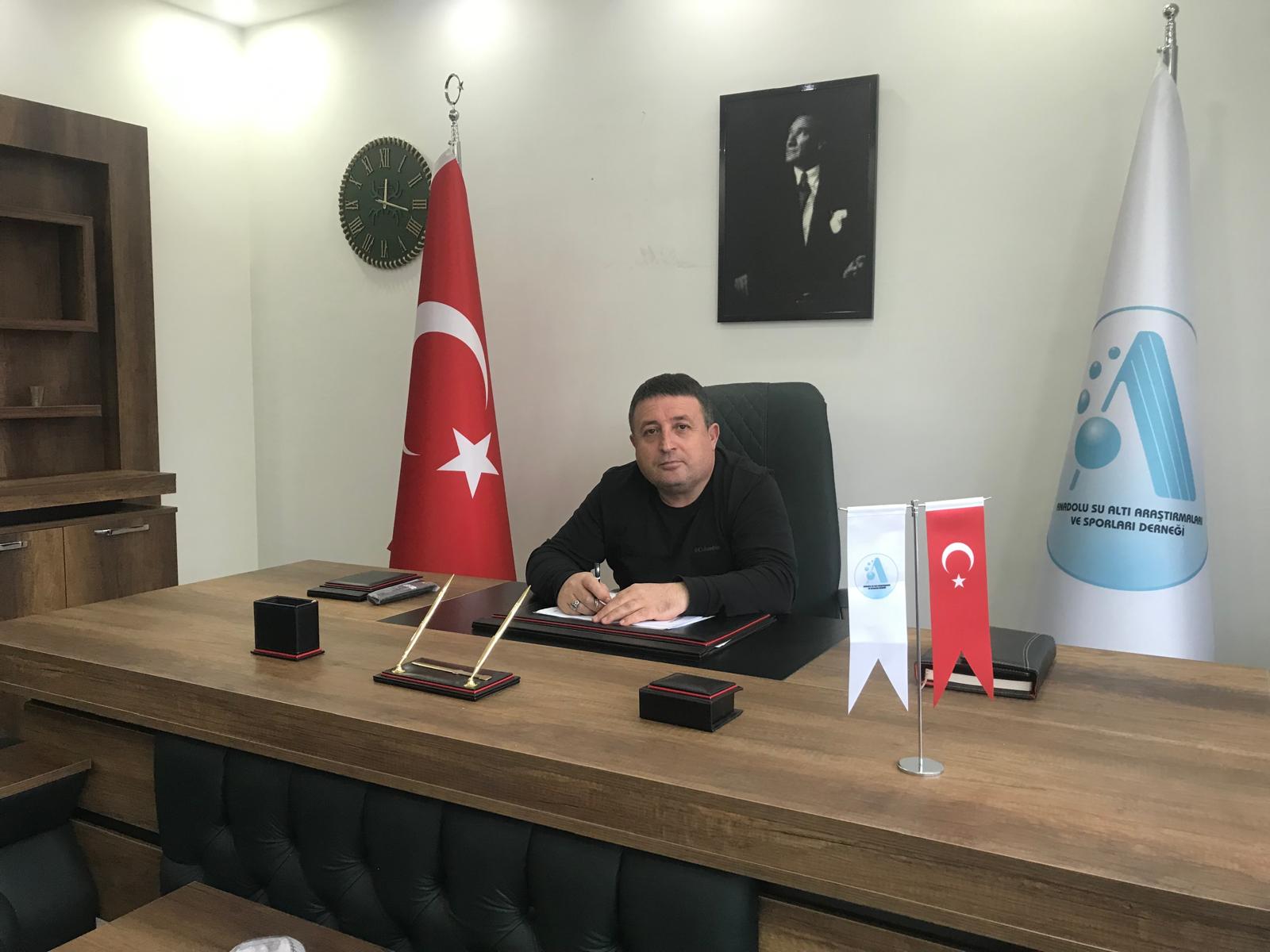

Anatolian Underwater Research and Sports Association (ASAD) Scientific Board Member and Fırat University faculty member, Prof. Dr. Ercan Aksoy, evaluated the recent earthquakes in the region and drew attention to the presence of numerous active faults.
Stating that “one of the regions in Türkiye where earthquakes occur most frequently is the Eastern Anatolia compression zone, which includes the province of Van”, Aksoy explained:
“This region covers the area east of Karlıova (Bingöl), where the North Anatolian and East Anatolian fault zones intersect. Why is this area called a compression zone? Because there is convergence between the Arabian Plate to the south (geologically, Batman and the plains further south belong to the Arabian Plate) and the Anatolian Plate (the mountainous areas northward starting from Baykan district of Siirt). To accommodate this convergence, numerous faults have developed in the Earth’s crust. As this convergence continues, the faults remain active and generate earthquakes. Considering that between 1900 and 2020 a total of 25 damaging earthquakes with magnitudes greater than 5.5—many producing surface ruptures—occurred in this area, seismic activity can be described as quite high.”
Aksoy continued:
“The Lice earthquake of magnitude 6.6 on September 6, 1975, which claimed nearly 2,500 lives, and the Van–Erciş-centered earthquakes of October 23, 2011, occurred on thrust faults caused by this compression along the southernmost Bitlis Thrust Belt. It is also known that the continuation of these thrust faults in the Caucasus region remains highly active and capable of generating earthquakes. The most destructive recent earthquakes in this seismic region were the Van–Erciş earthquake on October 23, 2011, and the Van–Edremit earthquake on November 9, 2011. The October 23, 2011 Van earthquake, with a moment magnitude (Mw) of 7.2, is among the three largest earthquakes in Türkiye for which ground acceleration records were obtained, along with the 1999 Kocaeli (Mw 7.6) and Düzce (Mw 7.1) earthquakes. Claiming the lives of more than 600 people, it also ranks among the ten largest earthquakes in Türkiye over the past 110 years in terms of moment magnitude.”
“THERE ARE MANY ACTIVE FAULTS WITH EARTHQUAKE-GENERATING POTENTIAL IN THE REGION”
Emphasizing that recent earthquakes in the Eastern Anatolia Region originate from active faults around Van, Aksoy noted:
“The Çaldıran–Muradiye earthquake of November 24, 1976, with a magnitude of 7.5, caused the deaths of 3,840 people. These faults have continued to produce many smaller earthquakes in subsequent years. Most recently, the magnitude 4.9 earthquake that occurred on December 6, 2021, at 00:46, with its epicenter in Lake Van, also occurred on one of these strike-slip faults. All these events demonstrate the presence of numerous active faults around Van with the potential to generate earthquakes.”
“WE MUST PREVENT EARTHQUAKES FROM TURNING INTO DISASTERS”
Mehmet Salih Aygün, President of ASAD, stressed the importance of preventing earthquakes from turning into disasters. Noting that the association aims to contribute to the process through the work of its Scientific Board, Aygün stated:
“As energy continues to accumulate due to the convergence between the Arabian and Anatolian plates and the resulting compression, these faults will continue to generate earthquakes. Since it is not possible to change the geological setting of our country, we must plan settlement and construction activities with this reality in mind and prevent earthquakes—natural events—from becoming disasters. In particular, settlements should never be built directly on active faults.”