Gökhan Karakaş – Istanbul
In accordance with the Ramsar Convention, which Türkiye is a party to, February 2 is celebrated every year as World Wetlands Day with international events. Accepted by 172 countries, the Ramsar Convention—one of the most important agreements ensuring the protection of natural resources at the state level—currently protects 2,435 wetlands worldwide. Activities highlight that 254,685,425 hectares of land across the globe are under protection. Within this framework, civil society organizations issued statements via the social change platform Change.org Türkiye.
Stating that World Wetlands Day has been celebrated for 25 years, Dr. Uygar Özesmi, General Director of Change.org Türkiye, noted that campaigns related to wetlands are among the most signed and widely supported. Özesmi said:
“Scientists indicate that over the past 50 years in Türkiye, the volume of water bodies lost from dried wetlands equals 24 Lake Eğirdirs or three Lake Vans.”
Tuz Lake
Young climate activist Deniz Yazıcı said:
“One of Türkiye’s most important ecosystems, Tuz Lake—once considered the country’s second-largest lake—is drying up. By sharing satellite images of Tuz Lake from different years, NASA has revealed the risk of its disappearance. Listed as a UNESCO World Heritage site and home to 6,000 bird nesting areas and 279 plant species, Tuz Lake is being lost due to both the climate crisis and poor management.”
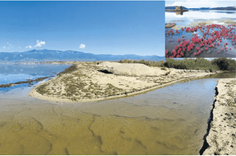
Bargylia Tuzla Wetland
Umay Karabaş from the Muğla Environmental Platform (MUÇEP) stated:
“The Bargylia Tuzla Wetland is one of the last lagoons in our country. Together with the Güllük Delta and Salih Island, it is an Important Nature Area. Its shores are full of species adapted to saline water. As sea levels rise due to the climate crisis, it serves as a buffer preventing saltwater from moving inland and salinizing the soil. Protecting this wetland is essential for sustaining life on land.”
Akçay Wetland
Zeynep İlhan, emphasizing efforts to protect the last wetland ecosystem in the Northern Aegean Region, said:
“Akçay Marsh is located within the borders of Edremit district, Balıkesir province. It is a reed-bed and marsh habitat covering 148.20 hectares and is home to approximately 150 bird species. Losing the Akçay Wetland would mean losing a key link of the entire Northern Aegean coastal wetland system—from Saros to Gediz—not just the Edremit Gulf.”
‘If We Don’t Protect Them, We Will Lose Them’
Aslı Pasinli, General Manager of WWF-Türkiye, said that wetlands and species are being lost rapidly. Recalling the mass deaths of flamingo chicks following the retreat of Tuz Lake’s waters in 2021, and Lake Burdur, whose water volume has decreased by 46% over the past 50 years, Pasinli stated:
“According to the Ramsar Secretariat’s 2018 report, due to issues such as construction, pollution, drainage, and overuse, 87% of the world’s wetlands have disappeared over the past 300 years. In Türkiye, there are 307 wetlands larger than 8 hectares registered in the National Wetlands Inventory Management Information System of the General Directorate of Nature Conservation and National Parks, covering a total area of 1,102,612 hectares. In a country with 25 river basins, half of the wetlands have lost their healthy quality structures since the 1960s. In other words, wetlands equivalent to the size of three Lake Vans have lost their ecological function.”